
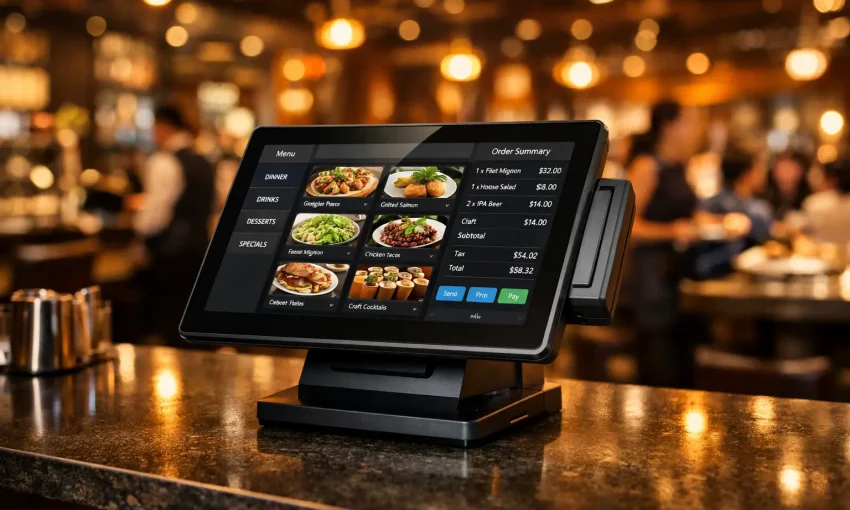
The restaurant industry is experiencing a technological revolution, and at the heart of this transformation lie the modern Point of Sale (POS) systems. As we navigate through 2026, restaurants that haven’t upgraded to sophisticated POS systems are finding themselves at a significant competitive disadvantage. With the global restaurant POS market projected to reach $26.03 billion by 2032, growing at a 6.8% annual rate, it’s clear that these systems have evolved far beyond simple transaction processors.
The Evolution of Restaurant POS Systems
Modern restaurant POS systems have transformed from basic cash registers into comprehensive business management platforms. Today’s solutions integrate artificial intelligence, cloud computing, and advanced analytics to create seamless operational ecosystems. These systems now serve as the central nervous system of restaurant operations, connecting front-of-house service with back-of-house efficiency.
The shift toward cloud-based solutions has been particularly significant, offering restaurants unprecedented flexibility and scalability. Unlike traditional on-premise systems that required extensive hardware investments and lengthy setup times, modern cloud POS systems can be deployed in days rather than weeks, making them accessible to restaurants of all sizes.
Essential Features That Define Modern POS Systems
AI-Powered Analytics and Insights
One of the most compelling reasons restaurants need advanced POS systems in 2026 is the integration of artificial intelligence. These AI-powered analytics provide actionable insights into sales trends, customer preferences, and staff performance. Modern systems can predict peak dining times, optimize inventory orders, and analyze menu performance with unprecedented accuracy.
AI-driven recommendations have shown remarkable results, increasing order values by 10-35% while improving customer retention by 20-30%. This level of predictive analytics helps restaurant owners make data-driven decisions that directly impact their bottom line.
Comprehensive Inventory Management
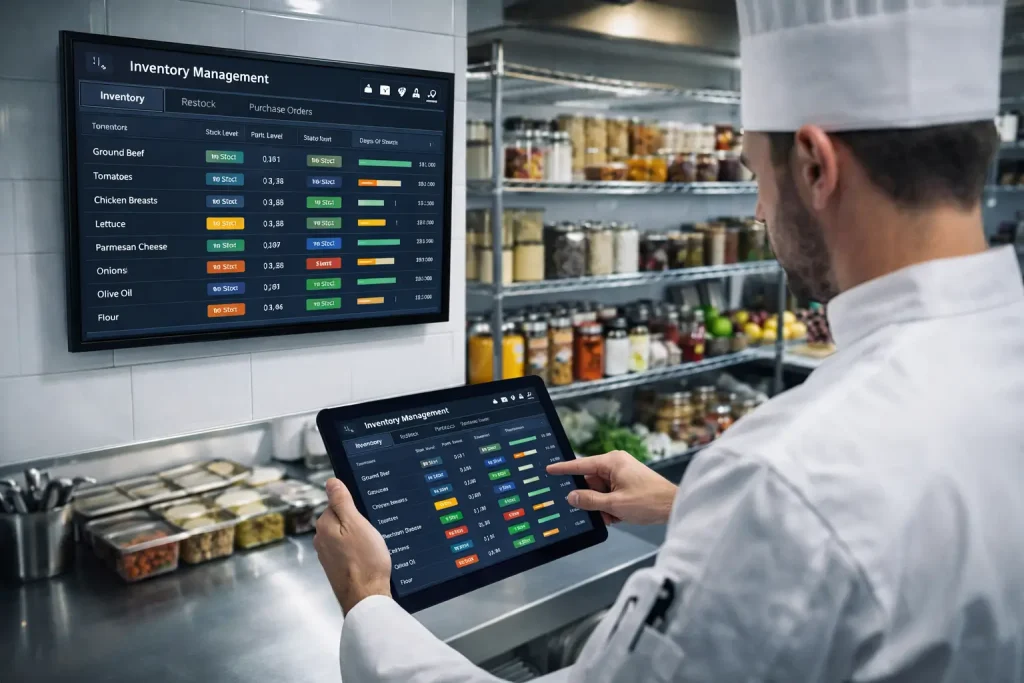
Effective inventory management remains one of the most significant challenges for restaurant operators. Modern POS systems automatically track inventory movement, alerting managers when items need restocking and preventing costly stockouts or overordering. This automated approach eliminates the errors inherent in manual tracking systems while providing real-time visibility into ingredient usage patterns.
The system’s ability to integrate with suppliers and automatically generate purchase orders based on preset parameters represents a significant operational advancement, saving both time and money while ensuring optimal inventory levels.
Seamless Third-Party Integrations
The restaurant landscape in 2026 demands extensive integration capabilities. Modern POS systems seamlessly connect with online ordering platforms, food delivery services, loyalty programs, and accounting software. This integration eliminates data silos and ensures consistent information flow across all operational channels.
The ability to manage multiple revenue streams from a single platform is particularly valuable for restaurants operating in today’s omnichannel environment, where customers expect consistent experiences whether ordering in-person, online, or through delivery apps.
Financial Benefits and Cost Savings
Reduced Operational Costs
Modern POS systems significantly reduce operational costs through automation and efficiency improvements. Staff training time is minimized thanks to intuitive interfaces, while automated processes reduce the need for manual data entry and reconciliation. These systems also reduce the risk of human error in calculations and inventory management, preventing costly mistakes.
The typical restaurant can expect setup costs to decrease from weeks to days when implementing cloud-based solutions, with software starting around $69 per month for basic functionality. However, the return on investment becomes apparent quickly through improved efficiency and reduced errors.
Enhanced Revenue Generation
Digital menu boards integrated with POS systems can increase average order value by up to 30%, while self-service kiosks boost check sizes by 8-15%. These technologies don’t just process orders; they actively contribute to revenue growth through strategic upselling and cross-selling capabilities.
The data collected through modern POS systems enables restaurants to identify their most profitable items, optimize pricing strategies, and create targeted marketing campaigns that drive repeat business.
Operational Efficiency and Customer Experience
Streamlined Order Processing
Modern POS systems excel at streamlining order processing from initial customer interaction through kitchen fulfillment. Real-time kitchen displays eliminate the need for paper tickets, reducing errors and improving communication between front-of-house and kitchen staff. Orders are automatically routed to appropriate preparation stations, optimizing kitchen workflow and reducing preparation times.
Enhanced Payment Flexibility
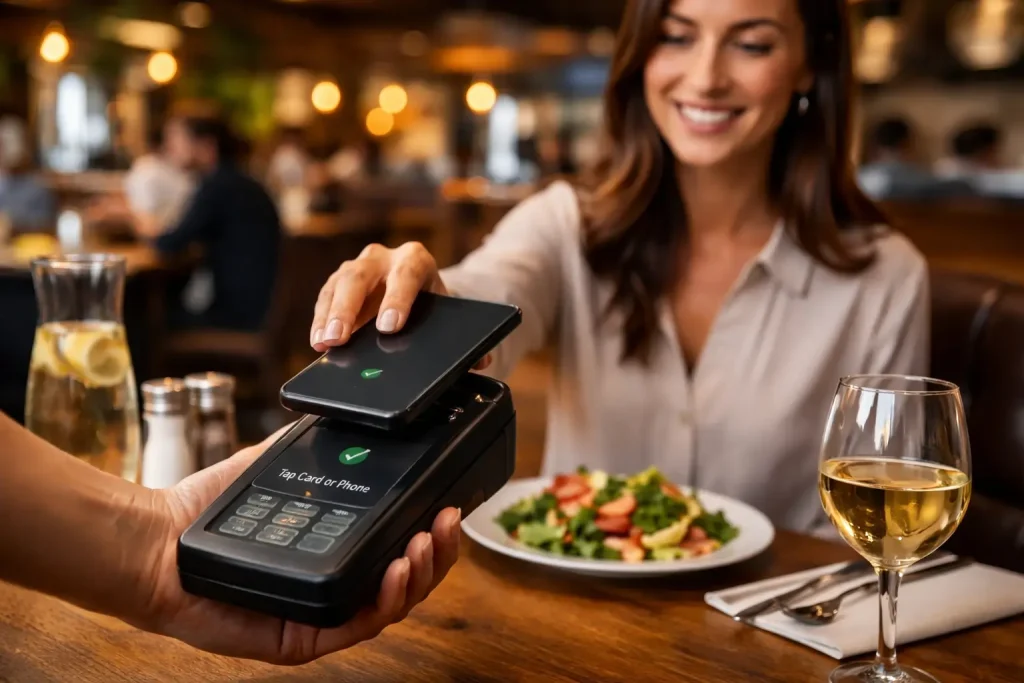
Today’s customers expect payment flexibility, and modern POS systems deliver by accepting multiple payment methods including traditional cards, contactless payments, mobile wallets, and emerging payment technologies. This flexibility reduces checkout friction and improves customer satisfaction while ensuring restaurants can accommodate all customer preferences.
Superior Customer Service
Voice-activated assistants and hands-free operation capabilities are emerging features that reduce workloads for restaurant employees while improving service quality. These technologies allow staff to focus on customer interaction rather than system navigation, creating more personal dining experiences.
Future-Proofing Your Restaurant Business
Offline Functionality
Recognizing that internet connectivity can be unreliable, modern POS systems include robust offline functionality. This ensures continuous order processing even during internet outages, with automatic data synchronization once connectivity is restored. This reliability is crucial for maintaining operations and preventing revenue loss.
Scalability and Flexibility
Cloud-based POS systems offer unmatched scalability, allowing restaurants to add locations, features, or capabilities without significant infrastructure investments. This flexibility is essential for growing businesses that need systems capable of evolving with their operational requirements.
Data Security and Compliance
Modern POS systems prioritize data security with advanced encryption, secure payment processing, and compliance with industry regulations. This protection is essential for maintaining customer trust and avoiding costly data breaches.
Making the Right Choice
Selecting the right POS system requires careful consideration of your restaurant’s specific needs, size, and growth plans. Essential features to evaluate include inventory management capabilities, employee tracking, customer engagement tools, and integration possibilities with existing systems.
Hardware considerations are equally important, with options ranging from traditional terminals to mobile tablets and handheld devices. The choice depends on your service style, space constraints, and operational preferences.

Conclusion
The restaurant industry in 2026 demands sophisticated technology solutions to remain competitive and profitable. Modern POS systems have evolved into comprehensive business management platforms that drive efficiency, enhance customer experiences, and provide the data insights necessary for strategic decision-making.
Restaurants that embrace these technological advances position themselves for success in an increasingly competitive marketplace. The investment in a modern POS system pays dividends through improved operational efficiency, enhanced customer satisfaction, and data-driven growth opportunities.
The question isn’t whether restaurants need a POS system in 2026—it’s which system will best serve their unique operational requirements and growth ambitions. With the right POS solution, restaurants can transform their operations, delight customers, and build sustainable competitive advantages in today’s dynamic dining landscape.
The time to upgrade is now. Modern POS systems aren’t just operational tools; they’re strategic investments in your restaurant’s future success.
5 FAQs for your restaurant POS
Q1: How much does a restaurant POS system cost in 2026?
Restaurant POS systems typically start around $69 per month for basic cloud-based software, with more advanced systems ranging from $150 to $400+ per month depending on features. Hardware costs like terminals, receipt printers, and card readers can add $500 to $2,000+ as a one-time investment. Many providers offer bundled packages that include both software and hardware, making it easier to budget for the total cost.
Q2: Can a POS system work without an internet connection?
Yes, modern restaurant POS systems include robust offline functionality that allows your restaurant to continue processing orders and payments even during internet outages. All data is stored locally and automatically syncs back to the cloud once your connection is restored, ensuring no transaction or order data is lost.
Q3: How long does it take to set up a modern restaurant POS system?
Unlike traditional on-premise systems that could take weeks to install, modern cloud-based POS systems can be fully deployed in just a few days. Most providers offer guided setup, training resources, and dedicated customer support to help your staff get comfortable with the system quickly and minimize disruption to daily operations.
Q4: Will a POS system integrate with my existing delivery and online ordering apps?
Absolutely. Modern restaurant POS systems are designed to integrate seamlessly with popular third-party platforms including food delivery services, online ordering apps, loyalty programs, and accounting software. This eliminates the need to manage multiple separate systems and ensures all your sales data flows into one centralized platform.
Q5: Is a POS system suitable for small or independent restaurants?
Yes, modern POS systems are designed to scale with businesses of all sizes. Small and independent restaurants can benefit just as much as large chains through improved order accuracy, faster service, automated inventory tracking, and valuable sales insights. Many providers offer affordable entry-level plans specifically designed for smaller operations, making it a worthwhile investment regardless of your restaurant’s size.


